
A winding path

“Everybody teaches you, I think, to hide it or fix it,” says Matthew Edwards about disability. Edwards is a senior associate researcher at the Diversity Institute at Toronto Metropolitan University’s Ted Rogers School of Management. He experienced both strategies: as a youngster, his family tried to fix his low vision—caused by an underdeveloped optic nerve—and then as an adult, he hid his disability.
“A huge part of my life was trying to keep up,” he says. At university, reading took him four or five times as long as his sighted classmates and colleagues, meaning hours that others had for socializing, research and other activities, he spent at the library. He didn’t tell students and colleagues he was legally blind. “I hadn’t been telling my students I couldn’t see them in the lecture hall. I hadn’t been sharing this with my colleagues. I was trying to portray this image of productivity and efficiency. It wasn’t great. It made me feel really lonely,” he says. “You’re always faking it.”
Edwards taught two classes per semester for seven years—“a lot of students”—and because of his blindness, didn’t recognize them. But students and colleagues didn’t know that. “They would say, ‘hi’ to me in the hallway, and I would come up blank. How does that make your student feel after they’ve taken four years of classes with me? I would try to make light of it, say, ‘I’m sorry, I’m horrible with names,’ that kind of thing. And that works once, maybe twice, with the same student. But after that, the student doesn’t come back to talk to you.”
Still, in other ways, his disability led Edwards to make connections he might not have as a sighted person, connections to communities marginalized by ethnic origins, race, class and gender identities, connections that brought with them a deepened philosophical and political understanding of systemic inequalities. But it wasn’t until Edwards achieved tenure at the University of Missouri that the connections among his areas of study and his personal situation started to fall fully into place.
“This is where my privilege come in,” he says. “Having tenure served me in the sense that the institutional permanence has given me the freedom to speak.” And what does he want to speak about? “We need to share our struggles, not just our successes,” he says. “If the successes are the only things we talk about, then we’re just creating the same system that makes people hide.”
Today, as his TMU bio puts it, Edwards is a “blind researcher, activist and community leader with over 10 years’ experience in strategic planning, program design, and assessment strategies around systemic inequities….”
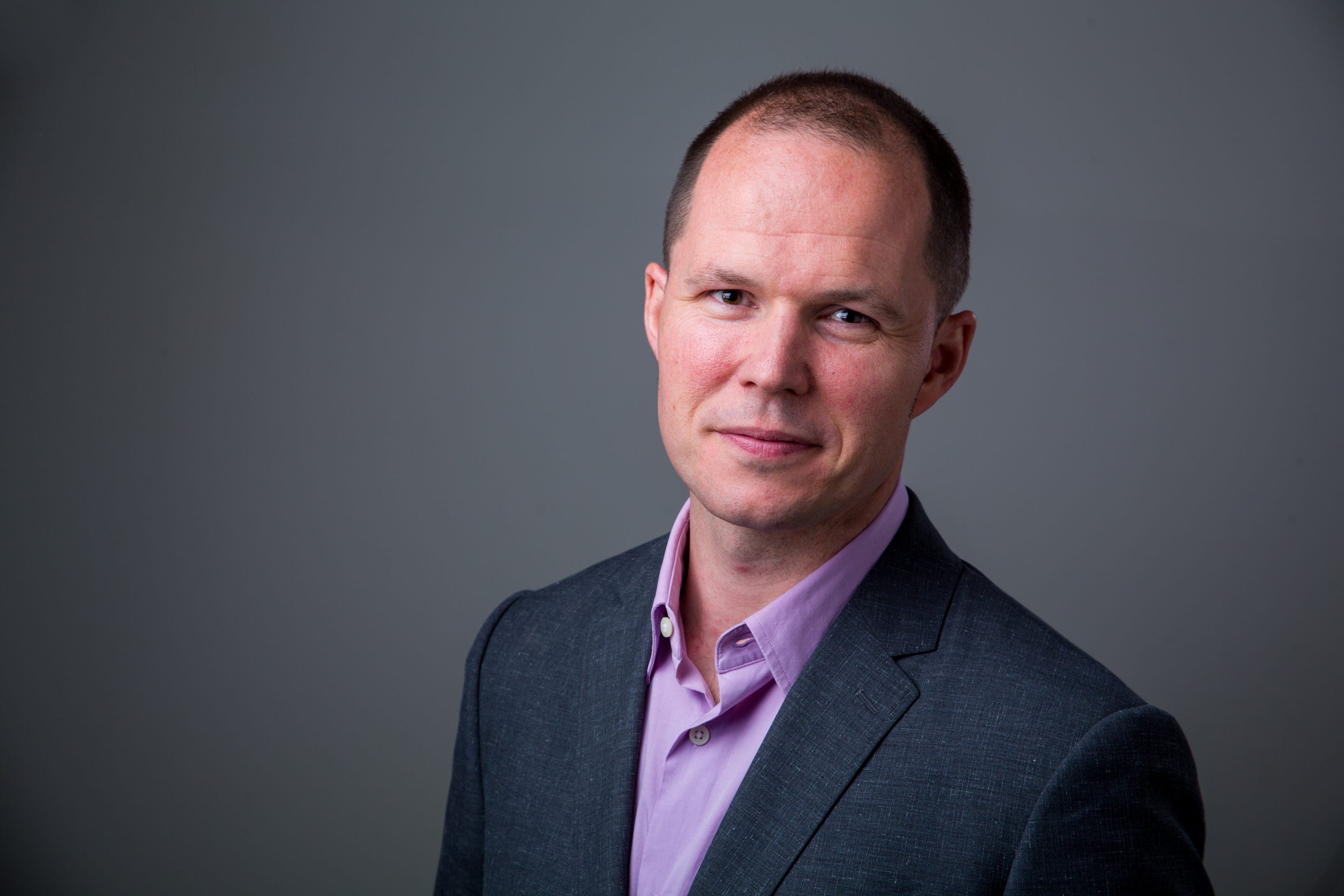
My conversation with Matthew covered a lot of ground. While my initial instinct was to shorten the discussion even further, I soon realized that this interview does its job by explaining how Matthew’s journey lead to his current thinking. That takes time and it’s worth the long read.
Read on for more from my conversation with Matthew Edwards. (Note that this conversation has been edited and condensed.)
Leigh: What was your career path?
Matthew: I did a pretty traditional pathway to academia: a bachelor's degree at McGill, a master's University of Ottawa, my PhD at Emory University and then I found a tenure-track position at the University of Missouri-Kansas City. I was really lucky to be able to follow that traditional path into academia.
Leigh: How did your disability influence that career path?
Matthew: Everybody teaches you to hide it [disability] or to fix it. As a young child, you try to do your best but your best is not enough. So, for example, [before I was diagnosed] my parents might ask me to go clean up the toys in the backyard. But I would miss a whole bunch of toys, because I couldn't see them, and my mom or dad would get upset. And so you become extra worried about detail. You try to be as thorough as you can.
I didn't get diagnosed [with an underdeveloped optic nerve] until I was somewhere around grade five. So I was 10 or 11 before anybody knew why I wasn't picking up the toys properly. And then we spent years trying to get the right pair of glasses for me but of course glasses don't help for an underdeveloped optic nerve. I was in high school before I learned about assistive technology, and at that moment, I was not in the right position to accept any of that. There was no way I was going to bring [assistive technologies] to school to help me see things.
In my first or second year at McGill, I remember jumping around classes to get close to the blackboard. I remember reading text with my nose literally touching the page. I didn't know that I could have support to get the documents enlarged. [But then I learned about an office at the library] and they had a room that was dedicated for students with disabilities, so that was the first kind of community built around disability that I saw.
And yet, I don't know if I fully embraced it. I could go sit and read and be productive. But I was still trying to be the best student. I still wanted to be successful. A person who does not have low vision can read probably five articles in the time it takes me to read one. So what does the university experience look like to somebody who's disabled? Well, disability is so wide and broad, that it's different for everybody. But for me, I don't think I started to really consider the impact on my learning until really recently, wanting to keep up with everybody else. It would have helped me a lot to have an idea of time management for disabled folk. What does it look like to somebody who's in a similar situation like me? I'm seeing people having all this time for socializing. And I'm spending 12 to 15 hours a day, trying to make sure that I get my readings done for class. I think it's really hard to envision because this ableist idea of the importance of success and productivity and efficiency are so embedded in what we do that developing disability models or civilian-formed models of success are really [difficult], they become so abstract, it's hard for us to envision what that looks like, because it's so far away from what productivity looks like today.
Then when I [was searching for an] academic position, the job market was all about what you've produced. How efficient have you been with your time? How much have you read? How familiar are you with criticism? And again, you have to cover so much ground. And I think that kind of analogy is really important. Covering ground is not easy for disabled folk: real ground, covering terrain, distance is not easy.
Leigh: How did these ideas, of productivity, disability, marginalization, start to all come together for you?
Matthew: When I was in high school, I participated in study abroad programs in Latin America, which exposed me to those cultures. I remember, as a teenager studying abroad, that I was always getting lost because I couldn’t see bus numbers and signs. And I didn’t appreciate the importance of getting lost until recently. Disability pushes you along different paths: you get lost because you can’t see what others see. The signs don’t work for you. For me, that was the disability experience: you ask for help.
At university, my research connected me from that Latin American context to queer and feminist cultural production, to other non-normative communities, indigenous African descendant and all those intersections. And poverty comes into it, of course. I was reading and studying these authors who were telling their stories, stories that address the violence that one experiences coming out as trans or queer or whatever it may be, and then economic struggles that go along with that. And at some point, people started to ask me, because I don't identify as queer or indigenous or as a person of color, well, why are you doing this? Why are you doing research in this area? It wasn't until recently that I made the connection that these authors in these communities taught me a lot about the importance of telling stories, they taught me a lot about understanding my own story as a disabled person, because I would start to see myself in the stories that they were telling.
Leigh: Can you explain further.
Matthew: I don't drive because I can't see, for example, so I take the bus. Who do I come into contact with? In smaller centres, outside of major cities, taking the bus is not common. Who takes the bus? Well, I do: people with disabilities, but also communities of color communities who are low income. And so I started to put these things together, disability lead me here, the path that disability makes leads me to connections with these communities. They're different paths.
I start to read, and I start to understand, I start to appreciate if it weren't for disability, I wouldn't be doing this research. And then I wouldn't be wanting to support other marginalized communities, other communities that are made to feel different, because of the way systems and processes are put in place. Then I start to think more creatively, so I start to read disability scholars and queer studies, scholars. They help me think about failure and inefficiency and going against dominant versions of productivity, and about what it means to use time differently. And they helped me to see myself represented in those uses of time, and energy. So this is my pathway to the present.
It's really hard to separate my personal story, my growing awareness, from an academic story of research, and from coincidence, because coincidence takes me places that were really important for me, in terms of discovering and learning, like the marginalized communities of Latin America, and the stories that they tell taught me essentially how to come out as blind, how to start to recognize and feel proud of those types of pathways.
Leigh: Would you say your professional journey in some ways has paralleled your experience as far as accepting your disability, understanding it, and communicating about it?
Matthew: For sure. I've been really lucky because in academia, in the humanities, you have quite a bit of flexibility in terms of how you define your career path, and the research that you do. After you get a tenure-track job, and perform the research they have hired you to do, then you have some flexibility in terms of the next steps. For me, receiving tenure coincided with this moment of self-reflection. At the university with a disability, I hadn't been telling my students that I couldn't see them in the lecture hall. I hadn't been sharing this with my colleagues. So I had kind of just tried to portray this great image of productivity, and efficiency, right, following what I had done all the time. And it made me feel really lonely.
Leigh: Lonely in what way?
Matthew: You're always faking. So you walk down the hallways--and this happened to me all the time—after seven years, teaching, on average two classes a semester, over seven years, you teach a lot of students. And I mean, I don't recognize any of them, because I couldn't see them in my class. But they all recognize me. So they would say hi to me in the hallway and then I would always come up blank. How does that make your student feel after they've taken four years of classes with me?
Leigh: So how would you? Is there a way that you would try to compensate for it?
Matthew: At the beginning, I would try to make light of it, and say, I'm so sorry, I'm horrible with names, that kind of thing. That works once or maybe twice with the same student. But after that, the student doesn't come back to talk to you. And that happened with colleagues also. So you see colleagues that were hired at the same time you were [but you don’t recognize them].
[I hid my disability because] I was really worried about being able to comply, to do what was needed for the job. And I was really worried about people seeing me as not being able to do that. So, I would wake up early to make sure that I can get all the work that I need to do done in the day. So by the time tenure rolls around, I feel okay, tenure means permanence.
[But I don’t have a network.] I don't know anybody. And so I started to make some pretty intentional changes. I finished my book project and it gets published. And while I haven’t quite made the connection to disability at this point, I've read about these queer and trans authors in the stories that they tell so I have a lot more tools, more models to work from, though not disability-informed quite yet. But they taught me a lot, to speak out and form community. I realized, okay, well, I need to talk to people, let's see what I can do. So I formed the Disability Alliance. I started to occupy, intentionally, more leadership roles. And I had to start speaking out in different faculty spaces, so people start to know about me.
This was just before COVID, and then when COVID hit, we continued to gather and I continued to be called upon. I was put in some positions where people wanted me to represent the disability community. And then, little by little, I started to see this as an opportunity for me to take on more of a leadership role within faculty to put disability on a different stage. So to use my own example, to not make it as invisible as it was for me. And this is happening at the same time that I'm developing a new research project that focuses on disability-informed research methods within the humanities. The question I’m exploring is how do we start to take advantage of these pathways that we follow, the pathways that are created by disability? It’s been really empowering to read others who have thought much longer than I have about the impact of disability has on research and on identity and things like that.
Then, I become a program facilitator for a university-wide institute for teaching and creating inclusive curriculum, helping professors to make their curriculum in their classroom as inclusive as possible. So I did this 180-degree flip, where I was that teacher not talking about any of my own experience, to ending up leading this faculty training initiative. Shortly thereafter, I became president of the faculty for the School of Humanities and Social Sciences at the university. In that space, I made my disability a talking point. For instance, in our Zoom meetings, I would need people to say their name first, because when there's lots of people on a Zoom screen, it's hard to know who's talking. And so these little things that had never, ever been spoken about, in an academic settings, I started to bring these to the table just by being present.
Leigh: What was it that you learned from doing that? What does a better experience look like?
Matthew: If there's something I would have loved to have, and I said this earlier, it would have been to have models of what being disabled and successful looks like. Part of my problem was that I was always told that we had to rehabilitate, that we had to get better. But I think disability for me was really special, because it put me in contact with people who if I were “better,” if I were somebody who wasn't blind, I wouldn't have been in contact with them. So I'm convinced that disability produces unique pathways that produce different experiences, and those produce different sets of knowledge. If we erase disability, we erase that whole trajectory.
And we need to see people like us in leadership, as successes, to say, okay, well, this is our normal. And that's really helpful, to know that taking five hours to read 20 pages, that's normal for you, that's normal for me. If I would have known that, back when I was doing my PhD, I would have asked for extra time. But I just didn't have the model, so you don't know what to ask for. And you don't know what accommodations look like, if you're the only person that you're comparing them to.
Leigh: It’s remarkable that you were able to persevere through all those situations.
Matthew: I've had a tremendous amount of support. And I think what helped me was the research that I was doing, research specifically on people who don't have that privilege. I was working really hard to develop a sensitivity to the impact of privilege and to the impact of systems and structures that create privilege, and how do they impact other people who don't have privilege? Over the same timeframe, all these social justice movements [were arising] that make the injustice produced by privilege kind of hit you in the face. I've had a tremendous amount of support from my wife and my partner, who can't hide her identity. I can hide being visually impaired because I've learned how to fake it. But she's a person of color with an accent, a woman. So she's taught me a tremendous amount of about the impact of privilege and the need to act, to do something.
Leigh: You make the point that you had no models to follow. In the case of the workplace, I struggle with this. I hid for years and had no role models. I didn't know what I needed for support, but at the same time, nobody, including myself, spoke up. So whose responsibility is it? How do we understand that?
Matthew: This is kind of how I came to the Diversity Institute [at Toronto Metropolitan University], because I started to see academia, the university, as an institution with a history of oppression.
The history of the university pretty much aligns with the history of the prison system and it aligns with the history of medical institutions, and the court system, legal institutions. All of these structures align and are developed at the same time, basically, and they all put people in certain places. So the university, it's for the excellent, the able-bodied, the best, the most developed people. And, then you have the hospitals, the prison system, for people who need rehabilitation or incarceration. So disability, it's not welcomed at the university. We talk about success and efficiency, we talk about being productive, and having timelines and deadlines. And those things don't support disability. We can have all of the accessibility offices and accommodations you want, but that type of model does not accept disability. There has to be a systems change. You have to start having people with disabilities speak up in leadership roles.
It's important to create models for people to follow, that aren't stoic. This is why storytelling is important, so they are not alone, which seems really cliché. But it was the game changer for me. When I started to be able to see my experiences and actually say to somebody, oh my God, you've lived the same life as me, that was a really important moment for me. It was this cathartic moment that I think changed me. And then I say to myself, well, okay, I have to tell my story in the classroom. This is a tiny step, starting to share much more openly with students who I am. And I've seen that it provokes their own sharing. They're not necessarily disabled, but they tell me experiences of their families, maybe like a problematic immigration status, or the pathways that brought their families here with them, or the struggles that they're having today and tomorrow and the next day.
We don't have to be all disabled to be sharing our stories. We can share our struggles, we don't have to only share our successes. If the successes are the only things we talk about, then we're just creating the same system that makes people hide. But if we start to tell the struggles, why we're having these struggles, tell the detail so that people can see themselves in those stories, then they have a model to follow. They see somebody. And it's not only models in leadership roles, right? You need models to build community, you need to see somebody who has a similar experience with you, in order for you to connect.
Leigh: When I was growing in my career, I was particularly scared that I'd be found out because I thought, what if I just get shut down? What would happen to me? What would happen to my family? Would I lose my job? Would I be put into a corner with no chance for promotion? Do you ever have this fear that, okay, I'm going to tell my story, because I realize it's powerful and people need to hear it, but that that same system might come down on you, silence or marginalize you?
Matthew: I think it's a great point. I think this is where my privilege comes in. On the one hand having tenure has served me in the sense that I have trusted the institutional permanence that has given me freedom to speak. But at the same time, I don't think that it's a threatening message that I'm sharing. Still, if I were to lose my job, I would not have financial stability. So I think it's fleeting, that notion of stability, but I do think I act on that idea that sharing my story would not cause me to lose my job, but maybe it could, for others in other situations. So that's a really important thing to talk about it. Social justice movements have taught us that people have to use their privilege to support others. And I think this is a good example. It wouldn't be helping anybody if I kept quiet. And maybe I'm speaking for somebody who doesn't feel comfortable yet.
Leigh: In all the work and effort that many people with disabilities make to stay hidden, do you think there's strength in that? Or is it more a form of almost self-abuse?
Matthew: It’s one of these things that I wish I could undo. I struggle with feeling like I've done enough each day. What is enough time to work? Is it eight hours?
I think there's a lot I don't know. So to go back to your point, I try to unlearn all that I've done for the past 35 years: I'm pretty sure to work way more hours than everybody else is not the best way to go. I know I've lost a lot of time with my family because of that. And I've made some bad decisions, personal decisions because of the priority I was placing on work. And I know that's not the right way.
One of the things that I love about the colleagues that I work with at the Diversity Institute is that we are like-minded. We are always talking about best practices in inclusivity. Yes, there are moments when you have to meet a deadline, but support is always a text message away. But it's a really interesting thing to negotiate: how do you negotiate timelines and deadlines and deliverables when disability doesn't really function on this corporate clock? You have to be around people who understand. But at the end of the day, what do you do when there is a deliverable? Who picks up the slack? What is a disability-informed kind of structure? People who are disabled often need support—maybe a support dog or a white cane or a wheelchair or whatever it may be. What if we start to think about our relationships in the workplace as support systems?
Leigh That’s interesting, that idea of a support structure within because then it's a matter of figuring out everybody's contribution. And it's different. Each person's contribution is different.
Matthew Yes. And it's hard to measure, and it's that I think that probably creates problems for people. But I think if we started to think about it, it's an interesting way to start to critically approach workplace culture. Because I think workplace culture ultimately reproduces an ableist framework.
Leigh Yes. And maybe there's power in it, for instance, having diverse boards and leadership can leads to measurable business results.
Matthew So in that, I see models, right? I see the possibility of stories being told and experiences being shared. And I think that's where the strength is: I think the strength in disability lies in the different paths that we're forced to follow, because of who we are. I would never want to highlight the 15-hour days that I had to read, in order to catch up to somebody who's only reading for four hours. That's not sustainable. Trying to produce as much as somebody else, even though it's a sign of resilience, it is not sustainable in terms in terms of happiness. So maybe it’s also about changing the framework, so it wouldn't be strength-centered or efficiency-centered—it would maybe prioritize other things.
It's so hard to unlearn all the things that hold disability down. I think the start is to tell stories, and that will lead to forming community. Then once we have community structures established, then we start to say, okay, this is another option. And then we start to have people with disabilities in leadership roles that can start to support models that are more framed around their lived experiences. That's where I think this all goes.
the fix - 4 with Matthew Edwards
If you had the power, what’s one simple change you’d make today?
It has been so important for me to hear about how others live with disability, and particularly, low vision and blindness. These stories have helped me to broaden my understanding of success, and normalcy. They have given me models to shape my own life in a positive way. If I had the power, I would ask people in places of influence to share their struggles with life, in general. These struggles allow us to connect despite our differences, and these connections are important when it comes time to define those (professional, social, personal) models to follow.
2. What's the best advice you never got?
I needed someone to tell me to be proud. Disability teaches you important lessons and that these lessons are valuable. This is not an easy thing to say. So many voices tell us otherwise.
3. What keeps you going?
Recently, I have found strength in the disability community and in the connections that are formed through empathy. I am interested in seeing what a socially just community looks like--I want to be there--and this motivates me to work hard each day.
4. What words do you live by?
Empathy is the most important tool we have. Take time to learn about the experiences of others.
Don’t miss more stories from the fix:
The Cost of Silence
It was meant to be a thank you lunch for the leadership team I was part of: with 20 minutes notice, we had to get to another building for our team-building reward. The travel logistics of the lovely gesture were a complete surprise to me…
Mid-life Crisis
For Wanda Deschamps, being diagnosed with autism at 46 changed her understanding of herself and shifted her career path, as she embarked to make neurodiversity inclusion the norm rather than exception